EN
EN  VI
VI 

Close
A Di Da Pagoda is located in Village 6, Loc Tan Commune, Bao Lam District, Lam Dong Province, approximately 30km from Bao Loc City. The site is also home to a Chau Ma ethnic minority village known as Dang Dung, which is why locals often refer to the pagoda simply as Dang Dung Pagoda.

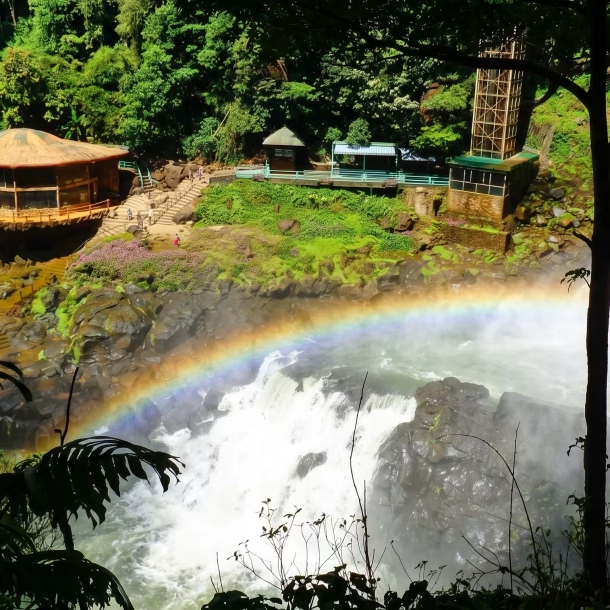
To get there from the city center, follow the road toward Damb'ri Waterfall, watch for the sign to turn right into Hoa Vien Dia Tang Vuong, then continue along the red dirt road for about 5km. Along the way, you can stop by scenic attractions such as Damb'ri Waterfall, Tam Duong and Thinh Thai tea plantations, and more.

Construction of the pagoda began in 2005 on an initial area of 13 hectares. It is the largest and most architecturally distinctive Buddhist complex in Bao Loc, blending Chau Ma cultural elements with traditional Central Highlands architecture. The pagoda also serves as a place of practice and community gathering for Buddhist congregations from various ethnic groups in the region.

The first thing that strikes any visitor upon arrival is the sweeping expanse of green tea hills that envelop the entire grounds — a hallmark of this land long renowned for its traditional tea cultivation. The main gate is built in the classic tam quan style with three entrances, four golden pillars, and a terracotta-tiled roof that evokes the silhouette of a Central Highlands Rong house. The stone steps leading up to the gate are flanked by rows of straight areca palms and decorative lanterns, creating a scene of quiet elegance.

Deeper inside lies a spacious courtyard filled with ornamental gardens, lotus ponds, and striking structures. Just to the left of the entrance, a large pond reflects a vivid red shrine rising from its center — a sight that immediately calls to mind the iconic One Pillar Pagoda in Hanoi. To reach the shrine, visitors cross a small, rustic wooden bridge that adds a charming simplicity to the scene.

Nearby stands the main hall of the pagoda. Flanking the path leading up to it are two large elephant statues facing each other in a solemn stance — a powerful symbol of Central Highlands culture. The forecourt features a circular decorative motif reminiscent of the ancient Dong Son bronze drums. The main hall is dominated by shades of red, built in the style of a Rong house with a steeply soaring roofline, topped with the "twin dragons flanking the moon" motif — a beloved decorative element in Vietnamese temple architecture.

For the Central Highlands people, the Rong house is the most sacred space in a village — believed to be where the spiritual energy of heaven and earth converges to protect the community. It is a source of immense pride and deep spiritual significance. It is fitting, then, that the main hall was built in the Rong house tradition, while still weaving in familiar motifs from broader Vietnamese culture.

Throughout the complex, intricate and meaningful decorative details abound — cranes in flight, dancing phoenixes, and figures playing traditional instruments, all reflecting the rich cultural heritage of Vietnam's ethnic communities and the Central Highlands in particular. At the rear of the pagoda, a guesthouse and dining hall provide a resting place for visitors during their tour.

The entire grounds are thoughtfully landscaped with grassy walking paths, ornamental plants, ponds, and statues of Amitabha Buddha, Guan Yin Bodhisattva, and Shakyamuni Buddha seated beneath a bodhi tree — together creating a serene, otherworldly atmosphere that brings a profound sense of peace and tranquility to all who visit.